What we mean by “bringing your authentic self to work”
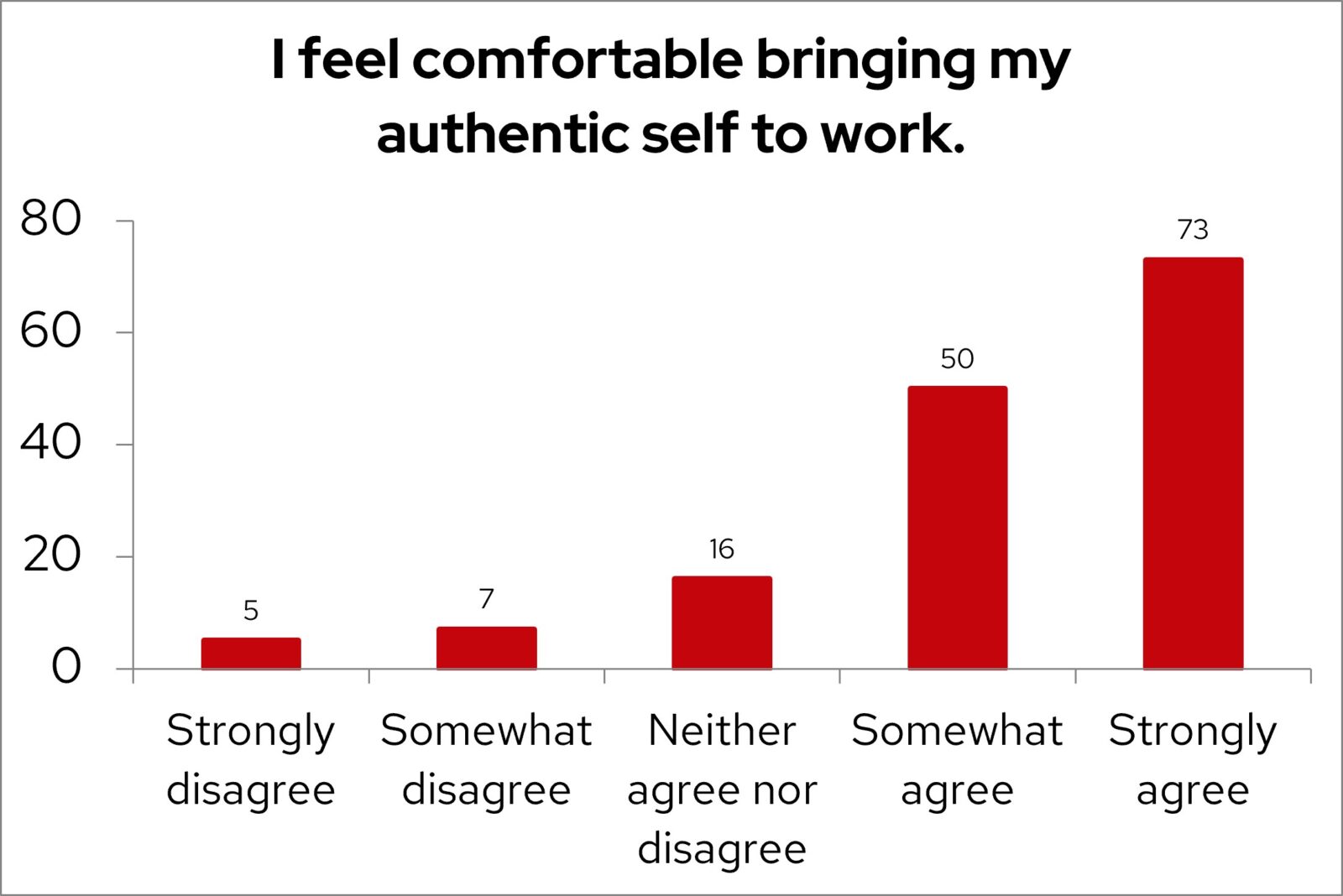
81.5% The percentage of DEM team members who, in our third pulse survey sent on September 1, said they agreed or strongly agreed that they feel comfortable bringing their authentic selves to work.
Authenticity at work means being able to show up as yourself without feeling the need to perform or fit into a particular mold. It means your communication style, perspective, identity, and the experiences that shaped you do not need to be hidden, minimized, or changed to belong on your team, within your office, or across the division. It means being able to enter meetings and conversations without constantly managing how you may be perceived. Most importantly, it means confidence that you are welcomed, valued, and respected for who you are, not simply tolerated.
Our identities, lived experiences, and social realities cause us to experience different levels of comfort, risk, and privilege when it comes to showing up fully as ourselves. The ability to be authentic at work is not experienced equally by everyone. Authenticity depends on psychological safety, trust, empathy, and genuine care for one another as people, not just colleagues. Many of us know what it feels like to be in environments where we do not feel welcomed or valued. Constantly monitoring ourselves, suppressing perspectives, or presenting a version of ourselves that feels inauthentic can be exhausting. Over time, that effort can create stress, diminish well-being, and limits our ability to contribute, connect, and thrive at work.
81.7% The percentage of DEM team members who, in our third pulse survey sent on September 1, said they agreed or strongly agreed that they felt a strong sense of belonging in their work.
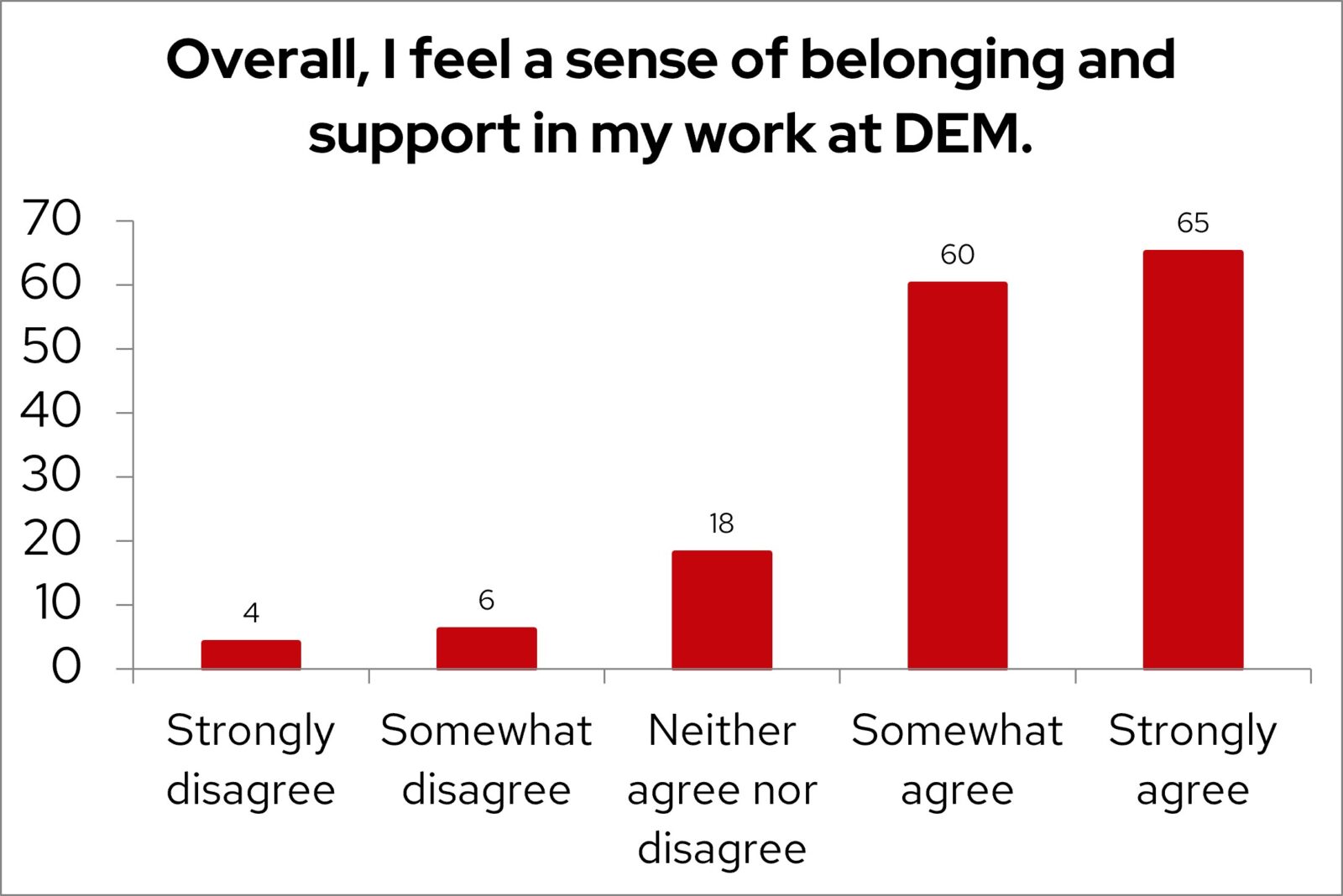
As we continue our journey toward a culture of belonging, our hope is that each of us feels able to show up fully at work and that we recognize the unique strengths, perspectives, and experiences that we each contribute. Just as importantly, building a culture of belonging requires all of us to help create the conditions where others can do the same. This work is not easy, and meaningful change does not happen overnight. But together, we can cultivate the psychological safety, trust, empathy, and care that allow authenticity to flourish and belonging to become a lived reality for everyone.