
Welcome
We are so excited that you chose to join our team.
The Division of Enrollment Management (DEM) believes in our ability to contribute towards an ecosystem of innovation. Through this relentless desire for bold ideas, DEM leads a comprehensive strategic enrollment approach to attract, enroll, support, and graduate the most talented students. We foster equitable and seamless experiences, value research in practice, engage in responsible stewardship, provide inclusive support, collaborate, and increase access to higher education to accomplish our goals. With students firmly at the center of our actions, decisions, processes, and services, our work helps to deliver the impact of UW–Madison as a world-class institution that enriches communities across the globe.
We are committed to making DEM a welcoming, inclusive workplace where you are set up to thrive. We have developed a belonging framework that seeks to ensure all team members can connect, learn, engage, and be supported within the workplace. This holistic approach to belonging is woven into your onboarding plan.
Thank you again for choosing to be a part of this team!
The DEM Team
Our Vision & Mission
Vision
Our Aspirations
Contributing to the Ecosystem of Innovation
Mission
Our Organizational Purpose
To attract, enroll, support, and graduate the most talented students
An Ecosystem of Innovation
Through UW–Madison’s world-class education, we believe in the innovation our talented badgers will contribute to their local, regional, national, and global communities.
Our Shared Future
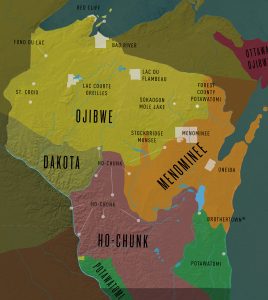
Another core principle of the Division of Enrollment Management is to understand the longstanding history that has brought us to reside on the land we work on, and to seek to understand our place within that history. Speaking and hearing words of recognition is an important step in creating collaborative, accountable, continuous, and respectful relationships with Indigenous nations and communities.
The University of Wisconsin–Madison occupies ancestral Ho-Chunk land, a place their nation has called Teejop since time immemorial. In an 1832 treaty, the Ho-Chunk were forced to cede this territory. Decades of ethnic cleansing followed when both the federal and state government repeatedly, but unsuccessfully, sought to forcibly remove the Ho-Chunk from Wisconsin. This history of colonization informs our shared future of collaboration and innovation.
Today, UW–Madison respects the inherent sovereignty of the Ho-Chunk Nation, along with the eleven other First Nations of Wisconsin.
As a public land grant university, UW–Madison has benefited from the dispossession of Ho-Chunk, Menominee, and Ojibwe ancestral lands through violence-backed land cessions. In 1838 and 1862, UW–Madison received over 235,500 acres of land that has since been almost entirely sold in order to raise revenue for the university.
DEM Overview
The Division of Enrollment Management (DEM) was officially formed in 2004. Today it consists of the Office of Undergraduate Admissions & Recruitment (OAR), the Office of the Registrar (RO), the Office of Student Financial Aid (OSFA), and the Office of the Vice Provost for Enrollment Management (OVPEM). The DEM includes over 300 team members (i.e. 190 full-time employees and 130 student hourlies) and many additional seasonal employees (e.g. admissions readers). The DEM is also supported by a team at the Wisconsin Foundation & Alumni Association (WFAA) that helps create and grow scholarship opportunities and programs that enrich the student experience. Each office is led by nationally respected experts in their fields, and the DEM’s efforts have been and continue to be recognized with campus, state, regional and national accolades in enrollment for advancements in student support, technological innovation, and research.
Division of Enrollment Management Teams
The Office of Admissions & Recruitment admits the undergraduate class and serves as the convening admissions team for UW–Madison. Each application is read thoroughly by two different readers. To find remarkable students, focus is placed on academic excellence and preparation as well as leadership, contributions to community, and achievements in the arts, athletics, and other areas. UW–Madison is particularly interested in building a class with students from a wide variety of lived experiences and diverse personal backgrounds who demonstrate strong potential for positive contributions to the Wisconsin community. A nationally lauded institution, UW–Madison has received accolades for best virtual campus tour in the Midwest from College Confidential and some of the highest admissions web traffic in the country as reported by University Business. Over the last several years, the university has set new records in numbers of applications, applicant pools, and enrolling class.
The priority for OAR is to be innovative leaders who center educational access and support for scholars of the wide diversity of identities, experiences, interests and beliefs who will embody the Wisconsin Idea.
The Office of Student Financial Aid is responsible for awarding financial aid to all undergraduate, special, graduate, and professional students across campus. The OSFA is committed to providing equitable access to financial resources for all students while supporting the enrollment goals of the University and the educational values of Wisconsin. The OSFA administers over $480 million in federal, state, institutional, and private aid annually. UW–Madison‘s philosophical approach to institutional aid awarding is to award first and most those with the highest financial need using a standardized federal methodology that reduces application burdens for students and families. Over the last several years, OSFA has launched several access programs for Wisconsin residents, including Badger Promise, Bucky’s Tuition Promise and Bucky’s Pell Pathway, all aimed at serving underserved and under-resourced residents. Future goals include expanding this level of support to our highest-need domestic non-resident students (e.g. non-resident Pell recipients). In addition to awarding financial aid and ensuring federal, state, and institutional compliance, the OSFA engages in community outreach to increase access to higher education and provides services for success to current students including coaching, mentorship, basic needs support, and numerous workshops.
OSFA’s priority is to support students using financial and other resources in accessing and navigating higher education.
The Office of the Registrar is the official source of student academic records for the entire university and provides essential services to schools, colleges, and departments in building and maintaining the schedule of classes (including scheduling of General Assignment classrooms); course, class, and instructor data maintenance; requisite creation and enforcement; student records maintenance; degree verification; residency for tuition purposes; and transfer credit evaluation. The team leads the coordination of and support for crucial campus-wide academic systems and processes, including the Student Information System (SIS), the Guide (Lumen), undergraduate and capstone certificate degree audit (DARS), and certification of athletic academic eligibility. The team also enables access to academic and student data, such as standardized reports, visualizations, and tools for ad hoc queries and official reports. The RO is the primary campus resource for recording, updating, accessing, and verifying information on the student record from admissions application to post-graduation. The RO is a national leader on enrollment processes; team members have presented at national conferences including the Higher Education User Group (HEUG) Alliance Conference, the American Association of Collegiate Registrars and Admissions Officers (ACCRAO) Annual Conference, and the National Association for College Admission Counseling (NACAC) Annual Conference.
The RO’s priority is to maintain the integrity of all core functions, develop staff, be collaborative, continuously support the teaching & learning mission and student success, as well as become a national model known for creativity and innovation.
The Office of the Vice Provost provides HR, fiscal, and project support for the division. The OVP is comprised of the Vice Provost, the Administrative team, and the Strategic Initiatives team.
Helpful UW–Madison Resources
-
The Office of Human Resources (OHR) New Employee Resources
-
New Employee Orientation
-
Benefits 101
-
Sick Leave Policy
-
Vacation Policy
-
Personal and Legal Holidays
-
International Faculty and Staff Services Resources
-
UW–Madison Professional Development Opportunities
-
Academic Staff Resources
-
UW Commuter Solutions
-
Employee Assistance Office (EAO)
Opportunities to Consider
-
American College Personnel Association (ACPA)
-
American Association of Collegiate Registrars and Admissions Officers (AACRAO)
-
National Association of Student Financial Aid Administrators (NASFAA)
-
College Board
-
Higher Education Users Group (HEUG)
-
Midwest Association of Student Employment Administrators (MASEA)
-
National Association of Student Personnel Administrators (NASPA)
-
National Scholarship Providers Association (NSPA)
Onboarding Roles & Responsibilities
The onboarding coordinator oversees the entire onboarding program and is responsible for coordinating the tasks within the process. The coordinator also tracks progress of the onboarding process in Workleap Onboarding and ensures each new team member has an opportunity to provide feedback about their onboarding experience.
Responsibilities
- Coordinate tasks within the onboarding process
- Act as contact for Workleap Onboarding questions
- Serves as the point person for new team member
- Track progress of the onboarding process
The most effective onboarding process is one that is owned by the new team member’s direct manager/supervisor. The hiring manager/supervisor is the hiring authority that the new team member would report to and support. The hiring manager/supervisor will work closely with the onboarding coordinator to ensure a successful onboarding process. They are integral to establishing an inclusive workplace and creating a sense of belonging.
Responsibilities
- Create and monitor the new team member’s Workleap Onboarding plan
- Meet with the new team member to discuss performance expectations and ensure they have the resources necessary to be successful
- Establish an inclusive workplace
A peer partner is a fellow employee (other than the manager/supervisor) who supports a new team member during their first year on the job. Their role is to offer advice and guidance regarding the day-to-day aspects of working at UW–Madison and within the Division of Enrollment Management. They contribute to the successful onboarding experience by helping to build community and a sense of belonging.
Responsibilities
- Serves as a resources and trusted advisor to the new team member
- Helps introduce and explain the culture at UW–Madison and DEM
- Provide peer-to-peer advice, listen thoughtfully and provide – when solicited – critiques, suggestions and feedback.
The DEM Human Resource/Payroll & Benefits department serves initially as a connection between the hiring manager/supervisor and the new team member. They ensure that proper preparation of paperwork and information is processed prior to the arrival date of the new team member. DEM Payroll & Benefits is responsible for providing information regarding the new team member’s benefit options, payroll and leave time.
Responsibilities
- Enters new employee information into HRS
- Serves as a resource and trusted adviser to the new team member
- Provides information regarding employee benefits
- Provides information regarding payroll (direct deposit, leave time, etc.)
Onboarding at a Glance
Orientation
- Meet the team
- Office Tour
- Benefits 101, New Employee Orientation registration
- Complete any remaining paperwork
- Review job expectations
Understanding
- Introduction to partner departments and units
- Ownership of roles and responsibilities
- Goal setting
- 30-day review
Integration
- Onboarding process evaluation
- Begin a professional development plan
- Midpoint management discussion
Within Year 1
- Comprehensive onboarding evaluation
- Celebration of 1 year on team
- Annual Performance Management conversation
Helpful How-To Guides
- Open a Microsoft Outlook appointment.
- Click on the “Location” button and search for a room (a list of conference rooms available to DEM team members and their calendar names can be found here.)
- Select the desired room and click “OK”
- Click the “scheduling assistant” button to confirm that the room is available
There are multiple ways to get help from DoIT for any IT issues.
- Submit a Ticket
- Chat
- Email help@doit.wisc.edu
- Call 608-264-4357
- Walk-In 1210 W. Dayton Street
Employee discounts
In addition to the suite of benefits offered to team members, a number of discounts are available.
- Free subscriptions to the Chronicle of Higher Education, the New York Times, and the Wall Street Journal.
- Discounted BCycle membership
- Office365 for personal computers
- Adobe Creative Suite for personal computers
- Reduced rate car rental for personal use
- Free 1Password family account
- Other discounts for UW employees
Commonly Used Acronyms
BO: Bursar’s Office
CALS: College of Agriculture and Life Science
DCS: Division of Continuing Studies
DAPIR: Data, Academic Planning and Institutional Research
DDEEA: Division of Diversity, Equity and Educational Achievement
DoIT: Division of Information Technology
L&S: College of Letters & Science
OPAR: Office of Policy Analysis & Research
OUA: Office of Undergraduate Advising
SJMC: School of Journalism and Mass-Communications.
SMPH: School of Medicine and Public Health
SoHE: School of Human Ecology
SVM: School of Veterinary Medicine
UWF: University of Wisconsin Foundation (Now part of WFAA)
VCFA: Vice Chancellor of Finance and Administration
VCSC: Vice Chancellor of Strategic Communications
WAA: Wisconsin Alumni Association (Now part of WFAA)
WFAA: Wisconsin Foundation and Alumni Association
WSB: Wisconsin School of Business
BNR: Banner
BTP: Bucky’s Tuition Promise
BPP: Bucky’s Pell Pathway
DEM: Division of Enrollment Management
OAR: Office of Undergraduate Admissions and Recruitment. Sometimes abbreviated to ADM.
OSFA: Office of Student Financial Aid
OVP/OVPEM: Office of the Vice Provost, Enrollment Management
RO: Office of the Registrar
AAU: Association of American Universities
ATP: Administrative Transformation Program
DARS: Degree Audit Reporting System
EAO: Employee Assistance Office
HRS: Human Resources System
PMDP: Performance Management and Development Program
SIS: Student Information System
SME: Subject Matter Experts
TTC: Title and Total Compensation