Events Standards and Best Practices
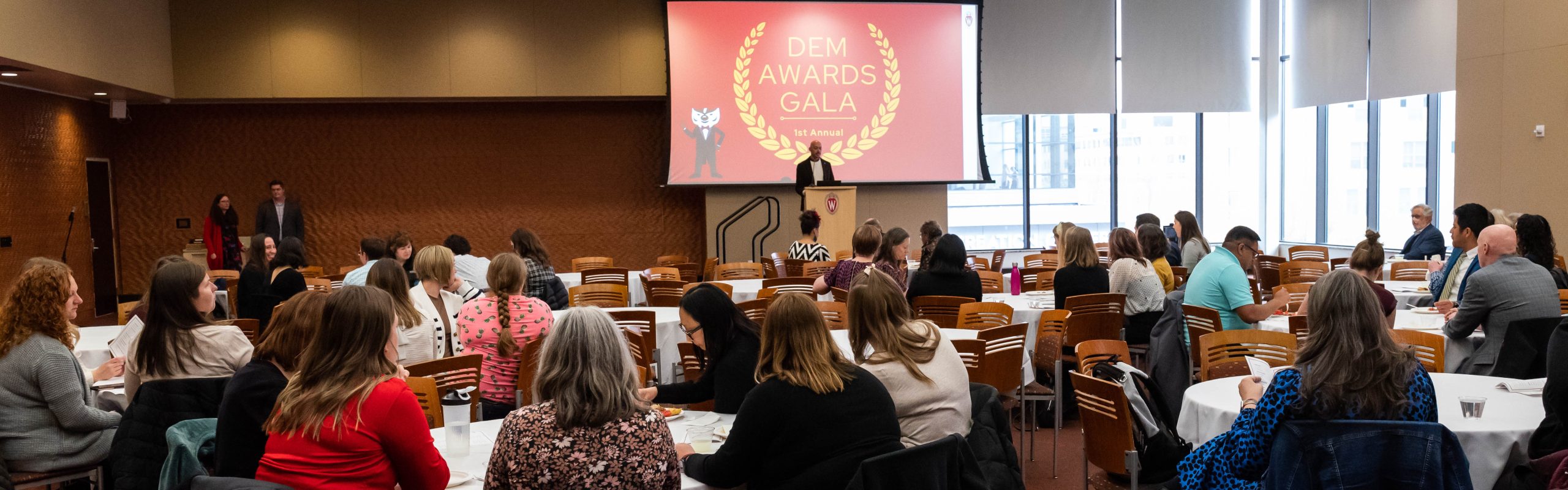
The Division of Enrollment Management produces many events each year to achieve divisional and institutional goals in enrolling UW–Madison students with the guidance of DEM’s Forward Focus. To ensure that anyone who participates in an event encounters a purposeful, valuable experience we have developed a set of standards and best practices. These will serve as a guide for creating consistent, inclusive, accessible, and audience-centric experience. They will also help DEM team members follow state and UW policies, while developing events that are efficient and cost effective.
DEM Event Standards
Each event must meet five standards.
- There should be an intentional purpose, goal, and audience
- All events will be welcoming, inclusive, and accessible to all audience members and attendees. DEM Event Inclusivity Guidelines provides more information.
- DEM event planning will be respectful of team members’ and the division’s resources and equitable in event planning and day-of tasks.
- DEM events will follow institutional and divisional policies, procedures, and guidelines as appropriate and as detailed in the DEM Event Planning Template and Checklist.
- Each planning team should work with the communications team to ensure that the event is properly marketed.
- Write a clear business purpose for the event. There must be a qualifying business reason for the event! Examples include: A recruitment event for incoming students, or a meal where business is conducted. If you are unsure if your business reason qualifies, please reach out to Kelly Layton (layton@wisc.edu).
- Define the goal of the event. What do you hope to achieve?
- Define the audience for the event, including expected size.
- Provide a way for attendees to respond to the event invitation. Use the RSVP to request attendee needs to ensure there is time to create a plan to accommodate requests.
- Ensure the event space is physically accessible. Provide details specific to each event to all attendees at least 1 day prior to the event.
- Identify ADA accessible restrooms, gender inclusive restrooms, lactation spaces, parking, and emergency exits. Ensure all DEM event volunteers/coordinators are aware of the locations of these spaces.
- Provide reserved seating for attendees with disabilities.
- Clearly state that masks are welcome. Ex. “We welcome you to wear a high-quality mask, especially to support attendees who may be immunocompromised or live with those who are immunocompromised.”
- Ensure all event information, content, and activities are accessible.
- Develop a budget that includes accommodation costs.
- Request accessibility needs in the announcement, the reminders, and the registration for the event.
- Create and share an agenda at least one-week in advance of the event. For an example of an agenda, click here.
- Provide captions for video and audio content.
- Reserve sign language interpretation.
- Request dietary needs such as Kosher, vegetarian, gluten-free or allergies.
- Include the following accessibility tagline to all event information materials:
- If you need an accommodation to attend this event, please contact event coordinator [NAME] at 555-123-4567 or <email address>. Requests for sign language interpreters, real-time captioning, or electronic documents should be made no less than two weeks before the event. We will attempt to fulfill requests made after this date but cannot guarantee they will be met.
- In addition to asking for audience needs, create a plan to accommodate last minute requests.
- Include UW–Madison Land Acknowledgment at the beginning of the event.
- Provide an announcement at the beginning of the event that attendees should do whatever they need to do to exist comfortably.
- Collect attendee feedback.
- Develop a planning team and designate an event planning lead. The planning team should ensure that the largest collection of views is considered.
- Be mindful of legal holidays, religious observances, and divisional/unit peak times.
- Divide and assign tasks (such as set-up or breakdown) equitably in a manner that is respectful of team members’ time, availability, skills, and roles.
- Identify the divisional and institutional resources that are available and appropriate for the event (budget, time, location, etc.).
- Ensure that your unit’s Communications lead/team member reviews all materials and information for the event.
- Complete the Event Planning Template
- Familiarize yourself with UW Event purchasing policies before making purchases.
- All contracts MUST be routed to Kelly Layton, through your office’s budget manager, prior to any payment.
- We are tax-exempt. WI tax-exempt information and forms. Tax-exempt information for other states.
- The meal limits must include tip. It is allowable to tip up to 20% if you remain within the maximum. The maximums also include tax, only when applicable outside of WI. Here is the link to the Business Meal Policy.
- You will need to include an event meal payment form and a list of participants form.
- An itemized vendor receipt is required. Cash register receipt only is not allowable.
- No alcohol unless prior approval is given.
- Work with your office purchasing card holders to use a departmental purchasing card for expenses whenever possible.
- Announce the event or meeting early to encourage attendance and allow for contingency and accessibility plans.
- Put event or meeting information on program website, even if sending an email or flier.
- Include text of email attachments in email body to improve screen reader access.
- Use the Center for User Experience’s Email guides for more suggestions.
- Include an accessibility tagline statement informing attendees how to request a disability accommodation.
Best Practices for Events
Every DEM event planning team should address the goals, budget, communications, accessibility, and audience experience of each event. Try to keep the audience in mind for every event. Let the audience needs dictate the planning for the event. A student event will have different needs from a staff event. Below are a set of questions to help with during the planning process.
- Who is the audience for the event? Keep this in mind at all times.
- What is the content and format of the event?
- Why are you holding the event? What problem does this event solve for the audience?
- Are there attendance, revenue, or other measurable goals?
- Have you written a business purpose?
- How can you ensure that the audience is able to experience the event with a minimum of obstacles?
- Have we planned for a variety of dietary needs?
- Do we know the accessible entrances to all event venues? Is there accessible transportation available?
- Are we providing options for everyone to receive content? (ASL, CC, braille, etc.)
- Who is not in the room during planning that should be considered?
- How easy is the event for attendees? Registration, transportation/parking, check-in, physical comfort, should be as smooth and simple as possible.
- Is the event fun? Serious? Informative?
- How will you determine if the event was a success? What kind of feedback will you collect from the audience?
- Have you connected with the communications person in your office?
- What is the best way to let your audience know about the event?
- What is the pitch? Briefly, why should someone attend?
- How can potential attendees get the information they need?
- How is the event funded?
- What is allowable? How is a purchase actually completed?
- How much will the event cost? What will your audience need? Some important components to consider:
- Venue
- A/V
- Catering
- Travel/parking
- Speakers/honoraria – all speakers outside of UW should be offered a speaking fee
- Marketing and promotion – this includes mailings, swag, ads etc.
Event Evaluation
When hosting an event, it is a best practice to solicit feedback from participants. Planning teams should determine how to gather feedback from event participants. This can be informal such as anecdotal or through a formal post-event evaluation.
However, don’t collect feedback just to collect feedback. You should collect information that will be useful and actionable for you. When selecting questions, decide how you would use any suggestions that the audience might make.
To help you collect feedback, we have developed a template in Qualtrics that you may copy and use. If you would like to customize the evaluation, we have provided a number of questions from four broad categories that might be useful.
General Experience
How likely are you to recommend this event to a friend or colleague? 0 (not at all likely) to 10 (extremely likely)
Which aspects of the event did you find more valuable and engaging?
What could be improved with this event?
Venue
How satisfied were you with the venue?
Was the venue appropriate for this event?
How did it enhance your experience?
How did it detract from your experience?
How would you rate the food quality of this venue?
Would you like to attend other events at this venue?
Content
Was the content relevant and useful to you?
What kinds of content would you like to hear about in the future?
Was the content what you expected?
How satisfied were you with the presenters?
Want to continue the conversation about the content? Connect with us at _________
Accessibility
Did you find this event accessible?
Did you encounter anything at this event that hindered you from engaging with the content?
This event was accessible to me.
Were the accommodations provided appropriate for what you requested?
Suggested Planning Timeline
Start Planning – 12 to 18 months
• Select preferred dates, rooms, and estimated attendees • Estimate your space needs and technical support required • Consider additional services for your guests like catering

Finalize Booking – 8 to 12 months
• Contact event venue to book your event • Provide funding source • Reserve your resources and services • Contact McBurney Center for Disability Resources for ADA accommodation support
Finalize Event Details – 4 months
• Begin discussing menu options with Catering • Decide on your room plan and set-up • Set your event schedule • Identify designated tech-person


Confirmations – 2 weeks
• Finalize event schedule • Finalize menu with Catering • Schedule to meet with event staff on event day • Final guest count due (4 days out) • Arrange for coverage of front desk operations • Prepare confirmation, including accessibility information
24-48 hours before event
• Ensure you have a way to transport materials to the venue • Coordinate buffer time for the planning team to deal with last minute issues • Ensure you have necessary supplies (lanyards, water for speakers etc) • Get service pass for parking

Event Planning Resources
-
Planning an event
-
Guide to Planning an Accessible Event
-
McBurney Guidelines for Events
-
General Accessibility Guides
-
Gender and Sexuality Campus Center Guide to Navigate Campus
-
Official Functions Policy
-
Business Meal Policies
-
Sales Tax Exemption (other states)
-
Campus Parking Map
-
Campus/Downtown Hotels
-
Reserve Space with Housing
-
PLACE Event Planning Services