Toolkit for Supervisors
What does it mean to be a DEM Supervisor?
Within DEM we believe in a human-focused approach to supervision which prioritizes providing support, seeking feedback, and advocating for team members across the Division. Supervisors are ultimately charged with creating an environment that prioritizes all team members abilities to thrive and be active contributors to team, unit, office, and Divisional strategic priorities. DEM supervisors play a critical role to our ability to attract, enroll, support, and graduate the most talented students.
Demonstrating Inclusive Leadership
Effective Communication
Supervisors should demonstrate an ability to recognize, understand, and manage one’s own emotions, as well as the emotions of others.
Tips:
Practice the 6 C’s to Communication –
- Be Consistent – inconsistency increases uncertainty, stress, and anxiety.
- Be Clear & Concise – avoid ambiguity to ensure your message is easily understood.
- Be Candid – no need to sugarcoat things.
- Be Courteous – consider the other persons perspective & reactions.
- Be Confident – find the appropriate balance of humbleness and confidence in your messaging.
Emotional Intelligence
Supervisors should demonstrate an ability to foster open dialogue, clearly articulate expectations and goals, as well as regularly communicate feedback.
Tips:
- Active Listening – Genuinely listen and reflect back on the words shared to demonstrate understanding.
- Validation – Acknowledge experiences, emotions, and challenges as valid and understood.
- Open Communication – Allow for open dialogue to share thoughts, concerns, and uncertainties without judgement.
- Empathetic Responses – Respond with compassion with phrases like “I understand”, “That must be difficult”, or “thank you for sharing”.
Empathy
Supervisors should demonstrate an ability to understand and connect with their team on an emotional level through active listening, validating feelings and experiences, as well as providing support.
Tips:
- Self-Awareness – Focus on recognizing and naming our own emotions.
- Self-Regulation – EQ is not about suppressing emotions but rather focusing on how to manage emotional reactions both within ourselves and within groups.
- Empathy – Leverage active listening to hone in on nonverbal cues, better understand perspectives and validate feelings.
- Social Skills – Seek feedback to gain insights into how you’re perceived emotionally.
Learning via the CLI Curriculum
All team members within DEM have a job duty which focuses on building a Culture of Belonging through a Collaborative Learning Initiative. Supervisors play a critical to the success of the Collaborative Learning Initiative (CLI) Supervisors are expected to talk with their team members about their learning journey as well as help them determine what they should be focusing on during their annual performance review. The resources below have been compiled to assist supervisors in this important task.
CLI Basics
- How to Discuss the Collaborative Learning Initiative
- Collaborative Learning Initiative Responsibilities
- Frequently Asked Questions
CLI Performance Discussions & Goals
- Guiding Questions for Performance Discussions
- SMART Goal Template
- Example Performance Goals
- Overcoming a Fear of Talking About Diversity
As a Supervisor, engaging and leading conversations around topics that lead to mutual respect and understanding with your team can at times present challenging learning opportunities. No matter how far along you may be on your own learning journey, it is important to recognize each of us are on our own unique journeys. It is also equally important to recognize that at times mistakes will be made and that this is an important part of our own learning especially as Supervisors. If a mistake is made, here are 5 tips to help move forward positively and constructively:
- Tip 1: Own It – Mistakes happen, it’s important to own it and not be on the defensive. Ignoring a mistake and hoping it will go away is counterproductive to the learning process.
- Tip 2: Educate Yourself – Seek understanding for why what was said was problematic. When seeking understanding, do not place the burden of learning on the person who may have been negatively impacted by your comment; seek to do the research yourself.
- Tip 3: Don’t Wallow – There’s no need to endlessly beat ourselves up over a mistake. What’s most important is the learning that will occur as a result moving forward.
- Tip 4: Take Action – Once you understand why what was said was a mistake, ensure there is an authentic apology and focus on not repeating that behavior again in the future. This is our chance to now get it right and execute on what was learned.
- Tip 5: Share – Most times mistakes occur due to a lack of knowledge. Once we have the knowledge, help others on your team by sharing your journey so they too can ensure they don’t make a similar mistake.
Supporting Team Members
All of us are humans, navigating not only the challenges and stressors associated with the work but also all that life throws our way. As a Supervisor within DEM it is expected that we lean into a human-centered approach to providing support to team members which is built on established trust, creates psychological safety among our teams, offers understanding and flexibility when possible, and actively seeks to meet team members where they are. It should be our goal as Supervisors to ensure spaces exist where team members can share their honest thoughts, contribute new ideas, as well as process challenges without the fear of judgement from others on the team.
What’s the Difference?
Trust and Psychological Safety
Psychological safety is the belief that your environment is safe for interpersonal risk-taking. It’s similar, but slightly different from, trust.
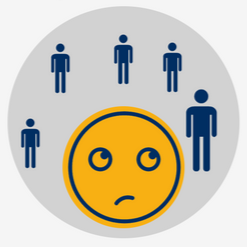
trust
Will YOU give others the benefit of the doubt when you take a risk?
“Bob is probably going to freak out if I disagree with him.”
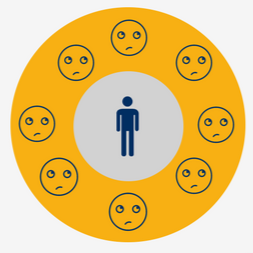
psychological safety
Will OTHERS give you the benefit of the doubt when you take a risk?
“My team expects me to speak up. It’s how we do things.”
From Science for Work. Sources: Edmondson, A.C. (2002). Managing the risk of learning: Psychological safety in work teams. Boston, MA: Division of Research, Harvard Business School, and Frazier, M.L. Fainshmidt, S. Klinger, R.L. Pezeshkan, A. & Vracheva, V. (2017). Psychological safety: A meta-analytic review and extension. Personnel Psychology, 70(1), 113-165.
Building Trust
- Practice vulnerability and humility. Showing emotions allows us to connect on a human level and creates an environment where team members can feel more comfortable to share ideas.
- Ensure feedback is always a two-way street and that as a Supervisor, there are mechanisms to receive feedback from the team regularly.
- Practice active listening to enhance your overall understanding of the team and what they’re experiencing.
- Practice transparency whenever possible especially around difficult decisions.
- Be authentic to you during individual conversations while seeking to build connection by understanding what team members passions and interests are.
Resource to Consider:
Creating Psychology Safety
- Establish shared norms with clear expectations across the team.
- Be a strong communicator – both through active listening as well as compassionate communication.
- Practice retrospectives and futurespectives while accepting as a team that mistakes will happen and can be learned from. Ensure team members feel included especially during moments of failure or uncertainty.
- Establish an environment where members of the team know they can depend on each other and can feel comfortable asking for help especially during challenging moments.
- Demonstrate the value add of the unique contributions of each team member to the teams overall goals.
- Allow for team members to be different from others without feeling like they will be rejected.
Resource to Consider:
Strategies to Provide Support
It’s important to remember we’re all humans and our brains can only cope with so much uncertainty in our lives. We must keep this in mind as we try to provide any support strategy for our teams.
- Coach with compassion by utilizing REACH:
- R – Resonate with your team and seek to connect with their experiences.
- E – Demonstrate empathy by feeling with your team and understanding their stressors because you have felt that way before.
- A – Cultivate awareness of yourself and others by reflecting on how elevated stress levels affect your leadership ability.
- C – Show compassion by demonstrating a genuine desire to help your team (think empathy plus action).
- H – Rely on humor and hope to inspire and cultivate a sense of safety and belonging.
- Consider utilizing the Inform, Connect, Guide, and Unit framework:
- When we inform, we should center our communications with the 6 C’s: Clear, Candid, Courteous, Concise, Confident, & Consistent
- When we connect, we should seek to build trust by taking a people-first approach, asking for feedback, and being radically candid in our approach. Ultimately our goal should be to build a psychologically safe environment for our teams. We show vulnerability by being transparent with how we are handling things, lead by example with self-care, and we practice active listening when asking for feedback.
- When we guide, we coach with empathy, seek to lighten the load, and advocate for our team. We seek to apply our communications and connections to the work we’re doing so that folx know what needs to get done.
- When we unit, we try to find the small wins to celebrate while building intentional teams & spaces to connect.
- Additional Strategies:
- Reassure team members of the ways their efforts create impact.
- Genuinely check-in with team members and ask about their well-being. This should not just occur in moments of stress, but should be a regular dialogue.
- Consider asking how they would like to be supported; everyone will respond differently and taking an adaptable approach to support is critical.
- Be willing to collaborate together on a possible solution to ensure no team member has to navigate stressors alone.
- Leverage empathy, emotional intelligence, and effective communication to play a significant role when providing support.
Resources to Consider:
Resources & Workshops
Resources
-
7 Acts of Inclusive Leadership
-
Supervising in a Hybrid Work Environment
-
Radical Candor
-
How to Use Active Listening Skills to Coach Others
-
On Leadership and Self-Awareness
-
Ways to Boost your Self-Awareness
Workshops
-
Thrive@UW Series
-
Fully Prepared to Lead
-
Principles of Supervision & Management
-
EQ@Work Series
-
Building Inclusive Teams
-
Coaching Employees for Retention & Career Development
-
Ignite: Fueling Organizational Excellence
-
Workplace Neurodiversity: Creating Spaces Where All Minds Can Thrive
-
Strengths Discovery for Personal Growth and Team Building